Tourist Attraction in Shanghai

Zhujiajiao Ancient Town:
Address: Zhujiajiao, Qingpu District. Transportation: Zhujiajiao Station, Metro Line 17.

Sijing Ancient Town:
Sijing Ancient Town: Address: Sijing Ancient Town, Songjiang District. Transportation: Sijing Station, Metro Line 9.

Qibao Ancient Town:
Qibao Ancient Town: Address: Qibao Ancient Town, Minhang District. Transportation: Qibao Station, Metro Line 9.

JinZe Ancient Town:
Jinze Ancient Town: Address: 235 Jinxi Road. Transportation: Dongfang Lvzhou Station, Metro Line 17.

Nanxiang Old Street:
Nanxiang Old Street: Address: 206 Jiefang Street, Jiading District. Transportation: Nanxiang Station, Metro Line 11.

Zhouqiao Old Street:
Zhouqiao Old Street: Address: 68 Shaxia Road, Jiading District. Transportation: Jiadingbei Station, Metro Line 11.

Longhua Temple
Address: 2853 Longhua Middle Road, Xuhui District, Shanghai City

Jing'an Temple
Address: 1686 Nanjing West Road, Jing'an District, Shanghai City

ade Buddha Temple:
Address: 170 Anyuan Road, Putuo District, Shanghai City

Zhenru Temple
Address: 399 Lanxi Road, Putuo District, Shanghai City
Bao Hua Temple
Address: 1000 Gaoping Road, Jing'an District, Shanghai City

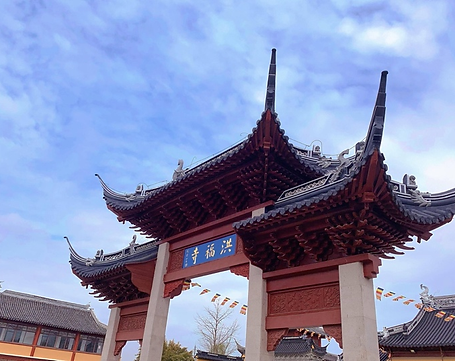
Hongfu Temple Address:
7.303 Tangcheng Street, Hongmiao, Fengxian Town, Fengxian District https://www.hfs.sh.cn/

Wanfo Ge (Ten Thousand Buddhas Pavilion):
Wanfo Ge (Ten Thousand Buddhas Pavilion):

Baoshan Temple:
Address: 518 Luoxi Road, Luodian Town, Baoshan District.

East Forest Temple:
Address: 150 East Lin Street, Zhujing Town, Jinshan District
Tourist Attraction in Wuhan

Yellow Crane Tower
(黄鹤楼, Huáng Hè Lóu)
The Yellow Crane Tower is the most iconic landmark and cultural symbol of Wuhan, Hubei Province. Renowned as the Number One Tower under Heaven, it holds a paramount place in Chinese history, literature, and architecture.
The tower's history dates back to the Three Kingdoms period (around 223 AD). It was originally built as a military watchtower by Sun Quan, the king of Wu, to observe enemy movements. It stands at 51.4 meters tall with five stories, appearing as nine stories from the outside due to its layered eaves.
Location: Snake Hill, Wuchang, Wuhan
Best Time to Visit: Spring and Autumn for pleasant weather.
Must Do: Climb to the top floor for the view, look for the poems inscribed inside, and walk across the nearby Wuhan Yangtze River Bridge.
Wuhan Yangtze River Bridge
(武汉长江大桥)
The Wuhan Yangtze River Bridge is a monumental landmark in Wuhan, holding a place of great historical and symbolic significance. It is celebrated as the First Bridge of the Yangtze River, marking the first modern bridge to be built across the Yangtze River after the founding of the People's Republic of China.
Its completion on October 15, 1957, was a groundbreaking achievement. It was the first double-deck bridge complex to carry both a railway and a highway over the Yangtze, with total length approximately 1,670 meters (about 1.04 miles), seamlessly connecting the Beijing-Guangzhou Railway and unifying the three towns of Wuhan into one integrated city.
Best Experience: Walk across the bridge on the pedestrian walkway. It takes about 30-45 minutes one way and provides a unique perspective of the river and the city.

Hubei Provincial Museum
(湖北省博物馆)
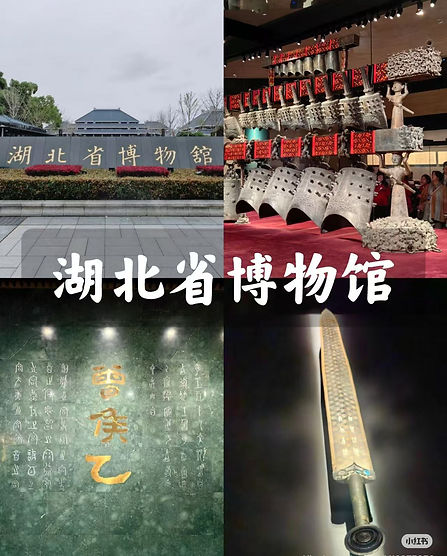
The Hubei Provincial Museum is one of China's most prestigious and renowned museums, housing a spectacular collection of cultural relics that tell the story of the ancient Chu State and the rich history of the Hubei region. Located next to the scenic East Lake in Wuchang, it is a national first-class museum and a key center for researching Chu culture.
The museum's fame rests on its world-class artifacts, several of which are considered national treasures of China.
1.The Chime Bells of Marquis Yi of Zeng (曾侯乙编钟): A massive set of 65 bianzhong (bronze chime bells) unearthed in 1978 from the tomb of Marquis Yi, a ruler of the Zeng State during the Warring States Period (433 BC).
2.The Sword of Goujian (越王勾践剑): A bronze sword belonging to Goujian, the King of Yue, from the Spring and Autumn Period (c. 771 to 403 BC).
3.Other Notable Artifacts: Lacquerware from Chu Tombs and ancient jade and goldware.
East Lake Scenic Area
(武汉东湖风景区)
The East Lake Scenic Area is a vast and cherished urban lake park in Wuhan, renowned for its stunning natural landscapes, rich cultural heritage, and recreational opportunities. It is officially recognized as a National 5A Tourist Attraction and holds the distinction of being the largest urban lake in China.
With a total area of 88 square kilometers, of which 33 square kilometers is water surface, East Lake is immensely larger than the more famous West Lake in Hangzhou. The lake is divided by man-made causeways into several distinct sections, each with its own character: Listening to the Wave Scenic Area, Moshan Scenic Area, Luoyan Scenic Area, White Horse Scenic Area, and more.
Must-Do Activities:
• Cycle or walk a section of the East Lake Greenway;
• Visit the Cherry Blossom Garden during bloom season;
• Take a boat ride on the lake for a different perspective.


Guiyuan Temple
(归元寺)
Guiyuan Temple is one of the most famous and revered Buddhist temples in Wuhan. Its name, Guiyuan (归元), translates to return to the origin or attain perfect completeness, a core concept in Buddhism referring to enlightenment and the return to one's pure Buddha-nature.
The temple was established in 1658 during the early Qing Dynasty by two Buddhist monks, Bai Guang and Zhu Feng.
1. The Arhat Hall (罗汉堂) , the Temple's Crown Jewel, houses a spectacular collection of 500 golden arhat statues. In Buddhism, arhats are enlightened disciples of the Buddha who have attained liberation from the cycle of rebirth.
2. The Sutra Pavilion (藏经阁), houses a precious collection of Buddhist treasures, including a 7,000-volume sutra printed in the Qing Dynasty, rare palm-leaf manuscripts, and other religious artifacts.
Must-Do Experience: Participate in the "Touching the Arhat" tradition. It's a fun and culturally immersive activity enjoyed by visitors of all ages.
Gude Temple (古德寺)
-- A Unique Architectural Marvel in Wuhan
Located in the heart of Wuhan, Gude Temple is not just a Buddhist sanctuary but a stunning architectural anomaly. Unlike any traditional temple in China, it is renowned for its eclectic fusion of Eastern and Western architectural styles, making it a unique and unmissable landmark.
Eclectic Architecture: The core building, the Yuantong Hall (圆通宝殿), is a spectacular blend of various global influences. You can clearly see elements of: ancient Roman structures (with its rows of arched columns and vaults), Gothic cathedrals (in its pointed window frames and ribbed spires), Islamic mosques (evident in the dome-like structures on the roof), and traditional Chinese Buddhist symbolism is seamlessly integrated throughout.
Gude Temple is more than a temple; it's a testament to cultural fusion and architectural boldness. It stands as a must-visit destination for anyone interested in architecture, history, and the unique spiritual landscape of Wuhan.
